other
  • OEM NTC Thermistor Probes — High-Precision & Free Samples | Focusensing
    August 27, 2025 OEM NTC Thermistor Probes — High-Precision & Free Samples | Focusensing
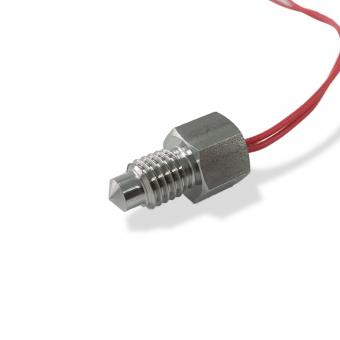
    High-Precision NTC Thermistor & Temperature Sensors | Focusens /* Minimal clean styling for demo (devs should move to CSS file) */ body{font-family: Arial,Helvetica,sans-serif;line-height:1.5;color:#222;margin:0} header{display:flex;align-items:center;justify-content:space-between;padding:18px 32px;border-bottom:1px solid #eee} header img{height:44px} .hero{display:flex;flex-wrap:wrap;gap:24px;padding:40px 32px;background:#f9fafb} .hero-left{flex:1;min-width:320px} .hero-right{width:420px;min-width:280px} .cta{background:#0073e6;color:#fff;padding:14px 18px;border-radius:6px;display:inline-block;text-decoration:none} .specs,.trust{padding:28px 32px} .product-photos{display:flex;gap:12px;flex-wrap:wrap} .product-photos img{max-width:100%;border:1px solid #eee;padding:6px;background:#fff} .lead-form{background:#fff;padding:18px;border-radius:8px;box-shadow:0 2px 8px rgba(0,0,0,0.06)} footer{padding:20px 32px;border-top:1px solid #eee;background:#fff;color:#666} ul{margin:0 0 12px 18px} .badge{height:56px;margin-right:10px} .meta-row{display:flex;gap:12px;align-items:center} { "@context":"https://schema.org", "@type":"Product", "name":"Threaded NTC Thermistor Temperature Sensor (MFP Series)", "image":["https://www.focusensing.com/uploadfile/202102/22/4429f1cfd00c30bde8bd1364268b6116_small.jpg","https://www.focusensing.com/js/htmledit/kindeditor/attached/20210222/20210222175628_37917.jpg"], "description":"MFP Series NTC thermistor temperature sensor. FDA food grade SUS316 housing option, M10 thread. OEM customization, -40~125°C, hi-pot 1750VAC.", "brand":{"@type":"Organization","name":"Focusens","logo":"https://www.focusensing.com/uploadfile/userimg/175c67dc6efd99840b2f2db49ee78500.png"}, "sku":"MFP-M10-NTC", "offers":{"@type":"Offer","url":"https://www.focusensing.com/threaded-mounting-ntc-thermistor-temperature-sensor-for-coffee-machine-with-sus316-house_p9.html"} } window.dataLayer = window.dataLayer || []; dataLayer.push({ 'event':'page_view', 'page_title': document.title, 'page_path': location.pathname, 'site_section': 'ntc-thermistor-landing', 'product_id': 'MFP-M10-NTC', 'product_name': 'Threaded MFP NTC Thermistor Sensor' }); Call: +86-551-69109668 Request Quote Precision NTC Thermistor Sensors — OEM & Custom Assemblies Food-grade / Medical / HVAC / Automotive grade — Focusens supplies NTC thermistors, RTDs, thermocouples and full cable assemblies to 60+ countries. ISO9001 / IP68 options available. Threaded M10 NTC probe with SUS316 housing — ideal for coffee machines & cooking devices Custom R25/B-value options (10K 3435, 10K 3977, 8K etc.) Working range -40°C to +125°C; Hi-Pot 1750VAC; Fast response Get Quote & Sample Download RT Table Technical highlights Key specs Sensing: NTC thermistor (10K / custom) Temperature range: -40°C to +125°C (customizable) Housing: SUS316 / SUS304 / Plastic options Ingress: IP68 option (overmolded probes) Hi-Pot: up to 1750VAC Applications Coffee machines, ovens, BBQ probes HVAC / refrigeration...
    View More

  • How Precision Temperature Sensors and High-Performance Lubricants Drive Industrial Efficiency
    May 15, 2025 How Precision Temperature Sensors and High-Performance Lubricants Drive Industrial Efficiency
    Introduction In modern industry, small details make a big difference. Accurate temperature sensing and reliable lubrication are two of those details. By combining top-quality sensors from Focusensing with premium lubricants from Zhongtian Petrochemical (ztshoil.com), companies can boost efficiency and avoid costly downtime. Why Temperature Control Matters Temperature affects every step in a production line. Too hot, and machinery wears out faster. Too cold, and processes slow down. That’s where resistance temperature sensors come in. Focusensing’s Sensor Solutions NTC Thermistors: Measure from –55 °C to 150 °C with ±0.2 °C accuracy. PTC Thermistors: Ideal for overcurrent protection and self-regulating heating. RTD Sensors (PT100/PT1000): Operate from –200 °C to 850 °C for precise readings. Digital Sensors: Offer I²C and SPI output for easy integration. Every sensor can be customized for thread size, resistance value, or temperature range. This flexibility helps meet unique needs in automotive, industrial automation, medical devices, and consumer electronics. The Role of Lubrication No matter how good your sensors are, machines still need proper lubrication. High-performance oils and greases reduce friction and wear. They keep equipment running smoothly. Zhongtian Petrochemical’s Lubricant Lineup Visit ztshoil.com to explore their products: Automobile Lubricating Oil M-CI-4 15W-40 Diesel Engine Oil SJ Synthetic Gasoline Engine Oil Industrial Lubricating Oil Anti-wear Hydraulic Oil (HM 32/46/68) Turbine Oil M-TSA 32 Lubricating Grease Polyurea Grease Lithium Base Grease FT108 With over 27 years of experience, Zhongtian Petrochemical delivers over 1,000 lubrication products. Their factory can produce 200,000 tons of oil annually, ensuring fast delivery and consistent quality. Synergy Between Sensors and Lubricants Combining precise temperature data with the right lubricant delivers clear benefits: Optimized Maintenance Sensors alert you to rising temperatures. You can change oil or grease before damage occurs. Extended Equipment Life Stable temperatures reduce thermal stress. High-quality lubricants protect moving parts. Improved Energy Efficiency Machines run smoother with less friction. Lower energy consumption cuts costs. Real-World Applications Automotive Manufacturing In engine assembly lines, Focusensing’s RTD sensors monitor coolant and oil temperatures. Zhongtian’s 15W-40 engine oil keeps parts running smoothly. Together, they ensure engines are tested under safe, consistent conditions. Industrial Automation Robotic arms and conveyors need tight temperature control. Threaded thermistor probes from Focusensing detect hot spots in real time. Anti-wear hydraulic oil from Zhongtian reduces cylinder wear. This combo cuts downtime and boosts output. Renewable Energy Wind turbines and solar inverters operate in harsh environments. Digital temperature sensors track internal temperatures. Specialized greases and turbine oils protect bearings and gear...
    View More
  • Top Thermistor Suppliers: How Focusensing Delivers Customized Temperature Sensing Solutions
    March 04, 2025 Top Thermistor Suppliers: How Focusensing Delivers Customized Temperature Sensing Solutions
    At Focusens, we understand the critical role that accurate temperature measurement plays in various applications. Our range of thermistors for sale is engineered to provide high precision and stability, ensuring optimal performance across a wide range of environments. Whether you're developing automotive systems, industrial machinery, medical devices, or consumer electronics, our thermistors are tailored to meet your specific requirements. What Are Thermistors? A thermistor is a type of resistor whose resistance varies significantly with temperature. This unique property makes thermistors ideal for temperature sensing applications. There are two main types: NTC (Negative Temperature Coefficient) Thermistors: Resistance decreases as temperature increases, offering precise measurement and control. PTC (Positive Temperature Coefficient) Thermistors: Resistance increases as temperature increases, commonly used for overcurrent protection and self-regulating heating. Focusens' Thermistor Offerings As a top thermistor supplier, Focusens provides a comprehensive range of thermistors for sale to suit various applications: NTC Thermistors: Known for high precision and rapid response, ideal for temperature sensors, probes, and medical devices. High Precision NTC Thermistors: Perfect for laboratory instruments, medical equipment, and industrial process control. PTC Thermistors: Designed for overcurrent protection and self-regulating heating in automotive systems, consumer electronics, and industrial machinery. Linear PTC Silicon Thermistors: Offering a linear resistance-temperature characteristic for precise temperature control. Applications of Focusens' Thermistors for Sale Our customized thermistors are used across multiple industries, including: Automotive Systems: Monitoring and controlling temperatures in batteries, engines, and electrical systems to ensure optimal performance and safety. Industrial Automation: Regulating temperatures in manufacturing processes and equipment to maintain quality and efficiency. Medical Devices: Providing accurate temperature measurements in incubators, sterilizers, and patient monitoring systems. Consumer Electronics: Protecting sensitive components in smartphones, laptops, and home appliances from overheating. HVAC Systems: Ensuring proper temperature regulation in heating, ventilation, and air conditioning systems for comfort and energy efficiency. Why Choose Focusens as Your Thermistor Supplier? High Precision: Our thermistors for sale offer exceptional accuracy for critical applications. Fast Response Time: Engineered for quick reaction to temperature changes, ideal for dynamic environments. Wide Temperature Range: Our sensors perform reliably across a broad spectrum of temperatures. Durability: Built to withstand harsh conditions, ensuring long-lasting performance. Customization: We offer tailored solutions including custom resistance values, packaging, and calibration services. About Focusens Focusens is a leading ...
    View More
  • RTD Sensors: The Reliable Choice for Accurate Temperature Measurement
    January 23, 2025 RTD Sensors: The Reliable Choice for Accurate Temperature Measurement
    Temperature sensors are critical in many industries, from manufacturing and automotive systems to healthcare and energy production. One of the most accurate and stable options for temperature measurement is the RTD sensor. At Focusens, we specialize in high-quality RTD sensors designed for a wide variety of applications. In this article, we will explain what RTD sensors are, how they work, and where they are used. We will also discuss the advantages of using RTD sensors in your applications. What is an RTD Sensor? An RTD sensor (Resistance Temperature Detector) is a type of temperature sensor that measures temperature by correlating the resistance of a material, typically platinum, with temperature. As the temperature increases, the resistance of the platinum wire increases in a predictable and linear way. This simple yet effective relationship makes RTD sensors highly accurate, stable, and reliable. The most common type of RTD sensor is the PT100, which has a resistance of 100 ohms at 0°C. There are also PT500 and PT1000 sensors, with resistance values of 500 ohms and 1000 ohms, respectively, at 0°C. How Do RTD Sensors Work? The working principle of an RTD sensor is based on the fact that the electrical resistance of certain materials increases with temperature. When current flows through the RTD element, which is typically a fine platinum wire, the resistance of the wire changes with the surrounding temperature. The change in resistance is measured and converted into a temperature reading. The relationship between resistance and temperature is highly predictable and nearly linear for platinum RTDs. This allows for accurate and precise temperature measurements. Typically, the resistance-to-temperature relationship is based on standardized equations, such as the Callendar-Van Dusen equation, or is derived from a lookup table for platinum-based sensors. Types of RTD Sensors RTD sensors come in different types, each designed for specific applications. The main types of RTD sensors are: PT100: The most commonly used type of RTD sensor. It has a resistance of 100 ohms at 0°C. PT100 sensors are widely used in industries requiring accurate temperature monitoring, such as industrial automation, HVAC systems, and laboratories. PT500: This RTD sensor has a resistance of 500 ohms at 0°C. PT500 sensors are used in applications where higher resistance is needed, such as in high-precision temperature measurement systems. PT1000: With a resistance of 1000 ohms at 0°C, PT1000 sensors are suitable for applications requiring higher resistance, such as long-distance signal transmission or systems with a lower signal-to-noise ratio. Thin-Film RTDs: Thin-film RTD sensors are constructed by depositing a thin layer of platinum onto a ceramic substrate. These sensors are cost-effective and commonly used in general-purpose applications, such as consumer electronics and automotive systems. Wire-Wound RTDs: These are constructed by winding a fine platinum wire around a ce...
    View More
  • Thermocouple vs. Thermistor: Which Temperature Sensor is Right for You?
    October 15, 2026 Thermocouple vs. Thermistor: Which Temperature Sensor is Right for You?
    Thermistor vs Thermocouple: Accuracy, Range and Response Compared A thermistor is a ceramic resistor whose resistance changes with temperature; a thermocouple is a junction of two metals that produces a small voltage. Near room temperature a good NTC thermistor is the more accurate of the two: a 10k part with ±1 % R25 and ±1 % B is within ±0.23 °C at 25 °C by our calculation, while a class 1 type K thermocouple is allowed ±1.5 °C (IEC 60584-1). The NTC's error grows away from 25 °C and passes the type K class 1 limit at about 110 °C. Coated NTCs stop at 125-150 °C and glass-encapsulated ones at about 250 °C; above that, a type K thermocouple covers the range up to about 1200 °C. Which one responds faster depends on the probe construction more than on the sensing principle. Updated 15 October 2026: rewritten with tolerance figures per temperature, published response-time data and a selection table. Reviewed by the Focusens Engineering Team. The comparison in one table Property NTC thermistor Thermocouple (type K) PT100 RTD, for reference How it works Resistance falls as temperature rises Voltage set by the temperature difference between the measuring junction and the cold junction Resistance rises almost linearly Typical range -40 to 125 °C for coated parts (Vishay NTCLE100E3); up to 250 °C glass-encapsulated (TDK G1541) -200 to about 1200 °C; the usable top end depends on sheath size and material (TC Direct) -200 to 850 °C (IEC 60751) Tolerance at 25 °C ±0.23 °C (±1 % R25, ±1 % B) ±1.5 °C, class 1 ±0.20 °C, class A Tolerance at 100 °C ±1.30 °C (same part) ±1.5 °C, class 1 ±0.35 °C, class A Signal at 25 °C 10 kΩ, changing about 4.4 % per °C Around 40 µV per °C About 0.39 Ω per °C What the input needs A bias resistor or current, plus a table or Steinhart-Hart fit Cold-junction compensation and a microvolt input A small constant current, 3- or 4-wire for accuracy Lead wire Ordinary copper; at 10 kΩ the leads hardly matter Thermocouple or matching extension wire all the way to the input Copper, but lead resistance counts on 2-wire The NTC figures are our calculation for a 10 kΩ, B = 3950 part; the method is in the next section. Accuracy: the thermistor wins near room temperature An NTC thermistor's error comes from two tolerances: the resistance at 25 °C (R25) and the B value that sets the curve. At 25 °C only the R25 tolerance counts. Away from 25 °C the B tolerance adds in, so the error grows in both directions. TDK and Vishay both describe the spread this way. A thermocouple's tolerance is fixed by class in IEC 60584-1:2013: for type K class 1 it is ±1.5 °C from -40 to 375 °C, then ±0.4 % of the temperature. The standard is clear that these tolerances apply to the wire as delivered and do not include drift in use. Neither do they include the instrument's cold-junction compensation error, which adds on top in a real system. Temperature 10k NTC, ±1 % R25, ±1 % B 10k NTC, ±1 % R25, ±0.5 % B Type K class 1 Type K class 2 Type T class 1 PT100 class A -...
    View More
  • Negative Temperature Coefficient Thermistors: Understanding Their Importance and Applications
    January 17, 2025 Negative Temperature Coefficient Thermistors: Understanding Their Importance and Applications
    In the world of temperature sensors, negative temperature coefficient (NTC) thermistors are among the most reliable and accurate components used to measure temperature. At Focusens, we specialize in high-quality NTC thermistors designed for a wide range of applications. This article will explain what NTC thermistors are, how they work, and where they are used. We will also highlight the advantages of choosing NTC thermistors for various temperature sensing needs. NTC thermistors are one of four core temperature sensor technologies used in modern industrial and consumer applications. For a complete comparison of NTC vs PTC thermistors, PT100/PT1000 RTDs, and thermocouples across accuracy, temperature range, and signal processing requirements, see our temperature sensor types complete comparison guide. For the NTC against a PT100 alone, with the tolerance of each at every temperature, see our RTD vs thermistor comparison. What is a Negative Temperature Coefficient Thermistor? A negative temperature coefficient (NTC) thermistor is a type of thermistor whose resistance decreases as the temperature increases. This means that as the temperature rises, the NTC thermistor’s resistance becomes lower, which is in contrast to positive temperature coefficient (PTC) thermistors, where the resistance increases as temperature increases. NTC thermistors are made from metal oxide materials that exhibit this negative temperature coefficient, and they are highly sensitive to small changes in temperature. This makes them ideal for precise temperature measurements in various applications, from industrial settings to consumer electronics. How Do Negative Temperature Coefficient Thermistors Work? The basic principle behind NTC thermistors is simple: the resistance of the thermistor decreases as the temperature increases. This relationship is used to measure the temperature of the environment where the thermistor is placed. The change in resistance due to temperature is measured by passing a small electrical current through the thermistor. When the temperature increases, the resistance of the NTC thermistor decreases, allowing more current to flow. This change in resistance can be measured and used to calculate the temperature of the thermistor’s surroundings. Because NTC thermistors are highly sensitive, they can provide accurate and quick temperature readings, even for small temperature fluctuations. Types of Negative Temperature Coefficient Thermistors NTC thermistors come in various types depending on their application. Here are the most common types of NTC thermistors: High-Precision NTC Thermistors These thermistors are designed for applications where high accuracy is required. They provide very precise resistance-temperature characteristics and are used in sensitive measurement systems. Standard NTC Thermistors These thermistors offer a balance between performance and cost. They are commonly used in general temperature sensing applications, including industrial p...
    View More
  • RTD Sensors: Accurate Temperature Measurement for a Range of Applications
    January 16, 2025 RTD Sensors: Accurate Temperature Measurement for a Range of Applications
    In the world of temperature sensing, RTD sensors (Resistance Temperature Detectors) are among the most reliable and accurate components available. At Focusens, we specialize in providing RTD sensors that offer high precision, stability, and long-term reliability for a wide variety of industries. Whether used in industrial automation, automotive systems, or medical devices, RTD sensors are essential for accurate temperature measurement. Let’s take a closer look at how RTD sensors work, their types, applications, and benefits. What is an RTD Sensor? An RTD sensor is a type of temperature sensor that measures temperature based on the change in resistance of a material, typically platinum, as temperature changes. The core working principle of an RTD sensor is simple: as temperature increases, the resistance of the material increases in a predictable manner. This relationship between resistance and temperature makes RTD sensors highly accurate and suitable for precise temperature measurements. RTD sensors are widely used in applications requiring high accuracy, stability, and repeatability. The most common type of RTD sensor is the PT100, which has a resistance of 100 ohms at 0°C. How Do RTD Sensors Work? RTD sensors are typically made from a pure metal like platinum because of its stable and linear relationship between resistance and temperature. The sensor consists of a thin wire or film of platinum, and its resistance changes as the temperature around it fluctuates. This change in resistance is then measured, and the corresponding temperature is calculated based on pre-defined calibration data. To measure temperature, an electrical current is passed through the RTD sensor element. As the current flows, the resistance of the platinum wire changes in response to the temperature. This change in resistance can be measured and converted into a precise temperature reading. Types of RTD Sensors There are several types of RTD sensors, with different designs and characteristics. The most common types include: PT100: PT100 sensors are the most widely used RTD sensors, with a resistance of 100 ohms at 0°C. They offer high accuracy and stability, making them ideal for a wide range of applications. PT1000 sensors are similar but have a resistance of 1000 ohms at 0°C. These sensors are used in applications where higher resistance values are needed. Thin-Film RTDs: These RTD sensors are constructed by depositing a thin layer of platinum onto a ceramic or glass substrate. Thin-film RTD sensors are cost-effective and provide good performance for general-purpose applications. Wire-Wound RTDs: These RTD sensors are made by winding a fine platinum wire around a ceramic core. They offer excellent accuracy and stability, making them suitable for high-precision measurements in industrial settings. Surface Mount RTDs: These RTD sensors are designed to be mounted directly onto surfaces to measure the temperature of equipment, machinery, or other components. They are widely...
    View More
  • PTC Sensors: Key Components for Temperature Regulation and Overcurrent Protection
    January 15, 2025 PTC Sensors: Key Components for Temperature Regulation and Overcurrent Protection
    PTC sensors, or Positive Temperature Coefficient sensors, are vital components used to monitor and control temperature in a wide variety of applications. At Focusens, we specialize in providing high-quality PTC sensors designed for accuracy and reliability. This article explores the working principle, types, and applications of PTC sensors, helping you understand their important role in modern technology. What is a PTC Sensor? A PTC sensor is a type of temperature sensor whose resistance increases as the temperature rises. The term “positive temperature coefficient” refers to this characteristic. As the temperature increases, the resistance of the material inside the PTC sensor increases proportionally. This property is what makes PTC sensors ideal for use in temperature sensing, overcurrent protection, and self-regulating heating applications. How Do PTC Sensors Work? The working principle of a PTC sensor is straightforward. PTC materials, typically made from ceramics or polymers, exhibit a resistance that increases sharply with temperature. In a typical setup, when the temperature exceeds a certain threshold, the sensor’s resistance increases dramatically, reducing the current flowing through the circuit. This makes PTC sensors useful for temperature protection and overload protection in electrical circuits. For example, in an overcurrent protection circuit, when the current rises too high, the PTC sensor heats up, causing its resistance to increase and limiting the current flow. This helps prevent damage to other components, such as motors or circuits, by reducing the excessive current. Types of PTC Sensors PTC sensors come in several types, each suited for different applications. Below are the most common types: Resettable PTC Sensors These sensors are self-regulating, meaning they automatically reset after the temperature returns to a safe range. Once the temperature exceeds the threshold, the resistance increases, reducing the current. When the temperature drops, the resistance decreases, allowing normal current flow to resume. These sensors are widely used in overload protection and thermal switches. Fixed PTC Sensors Fixed PTC sensors have a permanent increase in resistance after reaching a certain temperature. They are used in applications where once the temperature limit is reached, the sensor needs to stay in a high-resistance state, like in over-temperature protection systems. High-Temperature PTC Sensors These sensors are designed to operate at very high temperatures and are commonly used in industrial applications. Their high-temperature resistance characteristics are ideal for monitoring extreme temperature conditions, such as those found in furnaces or industrial machinery. Low-Temperature PTC Sensors Low-temperature PTC sensors are used in sensitive applications that require precise temperature control at lower temperatures. They are often used in devices that need to maintain a consistent, low temperature without exceeding criti...
    View More
1 ... 16 17 18 19

A total of 19 pages

Leave A Message
Any information wanted ? Leave us a message here please.

Home

Products

about

contact