The 1°F That Costs 2%: Sensors Inside a Chiller
Jul 02, 2026Here is a fact that reframes the whole conversation about cheap sensors. On a water-cooled chiller, raising or lowering the chilled-water supply temperature by one degree Fahrenheit changes the compressor's energy draw by about 2 to 2.5 percent. (Consulting-Specifying Engineer; ACHR News, from manufacturer chiller data.) The chiller doesn't know the "true" water temperature — it knows only what its sensor reports. So the sensor's error becomes the chiller's error, and the chiller's error becomes money.
ASHRAE's Guideline 22 specifies monitoring exactly these supply/return temperatures (plus condenser water) to compute plant efficiency, and AHRI Standard 550/590 governs how chiller performance is rated from such measurements. (ASHRAE Guideline 22; AHRI 550/590-2023.)
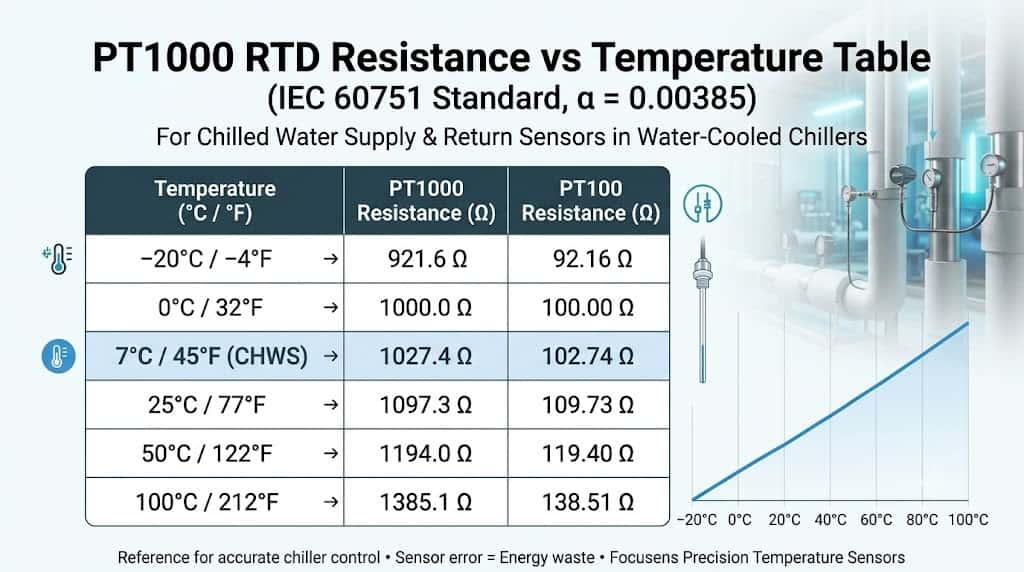
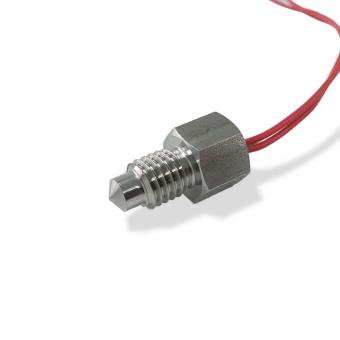
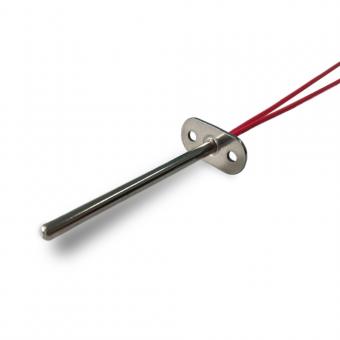
Accuracy is money on the water side, so supply and return are usually platinum RTDs. Platinum's resistance rises almost linearly with temperature, the relationship is fixed by IEC 60751, and the elements barely drift across years — a Class A PT100 holds about ±0.15°C at 0°C. PT1000 (1000 Ω at 0°C) is increasingly chosen over PT100 (100 Ω) for one practical reason: with ten times the base resistance, lead-wire resistance matters ten times less, which simplifies two-wire and longer runs. The wiring trade-offs are in our 2-, 3- and 4-wire RTD guide.
Because this is the reference people search for by name, here it is for the range a chiller works in (IEC 60751, α = 0.00385):
| Temp | PT1000 (Ω) | PT100 (Ω) |
|---|---|---|
| −20°C / −4°F | 921.6 | 92.16 |
| 0°C / 32°F | 1000.0 | 100.00 |
| 7°C / 45°F (CHWS) | 1027.4 | 102.74 |
| 25°C / 77°F | 1097.3 | 109.73 |
| 50°C / 122°F | 1194.0 | 119.40 |
| 100°C / 212°F | 1385.1 | 138.51 |
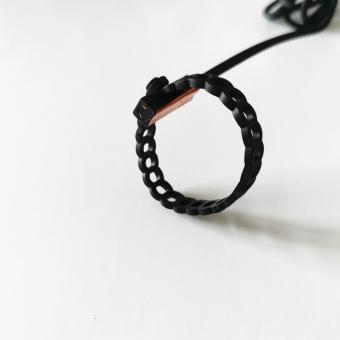
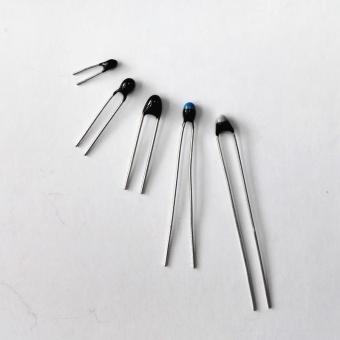
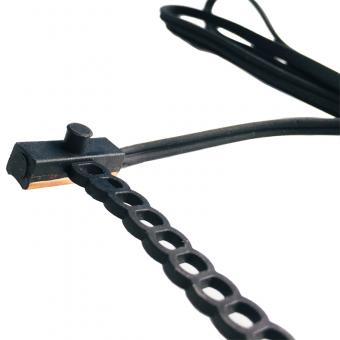
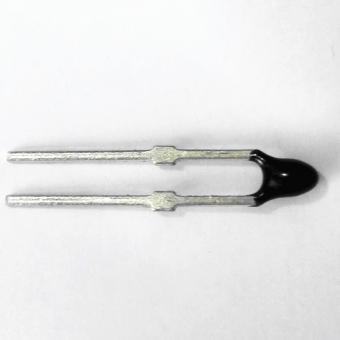
On refrigerant lines and pipe surfaces, speed and cost win, so NTC thermistors do the work. A standard HVAC-R NTC is 10 kΩ at 25°C with a β of 3435 or 3977 K over −40 to +105°C — the exact window a refrigeration cycle occupies. Where the sensor must clamp to a pipe instead of sitting in a well, an overmoulded part like the MFE1 pipe-clamp NTC gives a fast, sealed reading. The full NTC/PTC/RTD logic is in Article 5; suction-line specifics are in Article 6.
None of this accuracy survives a bad install. As our analysis of where BAS energy savings vanish argues, the loss usually happens at the sensor, not the chiller. Firm contact, insulation over the tip, sensing on flowing pipe — the mechanics are in our mounting guide and Article 7. The system-level view is in the pillar.
No.1 XiSan Road, Electromechanical Industry Park , High&New Tech.Zone. Hefei,Anhui,China
Tel : +86-551-69109668
Whatsapp : +86-13339100504
Email : info@focusens.com
Skype : melodyliu520






 +86-551-69109668