PT1000 RTD Table: Resistance Chart, Calculator & Class A/B Tolerance
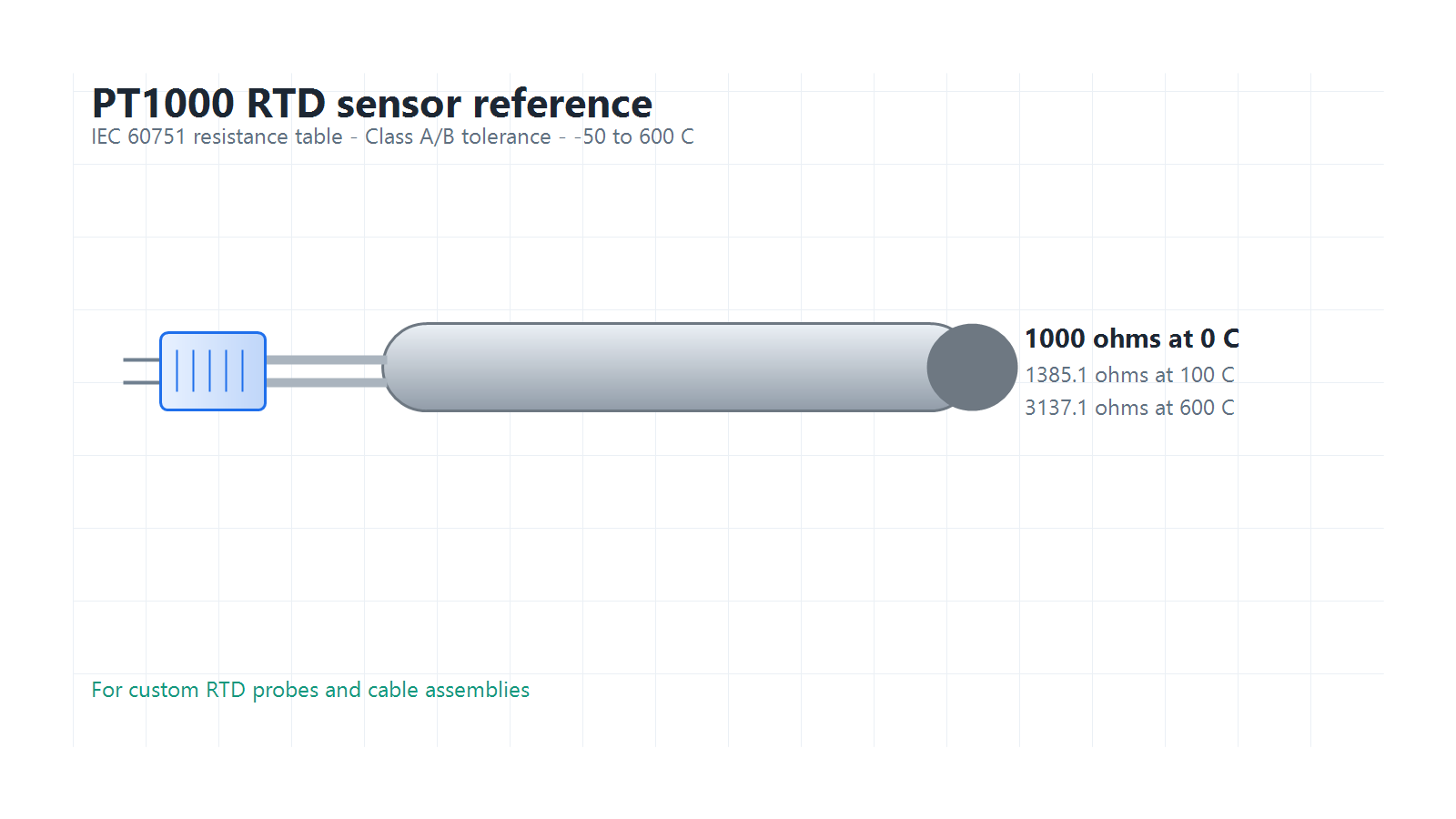
Jun 05, 2026A PT1000 RTD measures 1000.0 ohms at 0 C, about 1385.1 ohms at 100 C, and about 3137.1 ohms at 600 C on the IEC 60751 alpha 0.003851 curve. Use the quick table below for common engineering points, or download the full 1 C-step PT1000 resistance chart from -50 to +600 C.
Publisher note: Place the interactive calculator and CSV/PDF download controls directly below this answer block. This is the click-winning section for pt1000 rtd table and pt1000 table.
| Temperature (C) | Resistance (ohms) | Class A tolerance (+/- C) | Class A tolerance (+/- ohms) | Class B tolerance (+/- C) | Class B tolerance (+/- ohms) |
|---|---|---|---|---|---|
| -50 | 803.1 | 0.25 | 0.99 | 0.55 | 2.18 |
| -40 | 842.7 | 0.23 | 0.91 | 0.50 | 1.98 |
| -20 | 921.6 | 0.19 | 0.75 | 0.40 | 1.57 |
| 0 | 1000.0 | 0.15 | 0.59 | 0.30 | 1.17 |
| 20 | 1077.9 | 0.19 | 0.74 | 0.40 | 1.55 |
| 25 | 1097.3 | 0.20 | 0.78 | 0.43 | 1.65 |
| 50 | 1194.0 | 0.25 | 0.96 | 0.55 | 2.12 |
| 100 | 1385.1 | 0.35 | 1.33 | 0.80 | 3.03 |
| 126 | 1483.3 | 0.40 | 1.51 | 0.93 | 3.50 |
| 150 | 1573.3 | 0.45 | 1.68 | 1.05 | 3.92 |
| 200 | 1758.6 | 0.55 | 2.02 | 1.30 | 4.78 |
| 250 | 1941.0 | 0.65 | 2.35 | 1.55 | 5.61 |
| 300 | 2120.5 | 0.75 | 2.67 | 1.80 | 6.41 |
| 350 | 2297.2 | 0.85 | 2.98 | 2.05 | 7.18 |
| 400 | 2470.9 | 0.95 | 3.27 | 2.30 | 7.93 |
| 450 | 2641.8 | 1.05 | 3.56 | 2.55 | 8.64 |
| 500 | 2809.8 | -- | -- | 2.80 | 9.33 |
| 550 | 2974.9 | -- | -- | 3.05 | 9.98 |
| 600 | 3137.1 | -- | -- | 3.30 | 10.61 |
Download the complete 1 C-step table: data/pt1000-table.csv or data/pt1000-table.pdf.
Embed the bidirectional calculator module: modules/pt1000-calculator.html.
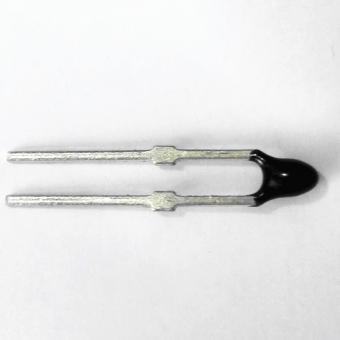
A PT1000 is a platinum resistance temperature detector with a nominal resistance of 1000 ohms at 0 C. It uses the same IEC 60751 platinum curve as a PT100, but its resistance is ten times higher. That gives a PT1000 about 3.85 ohms/C sensitivity near 0 C, compared with about 0.385 ohms/C for a PT100.
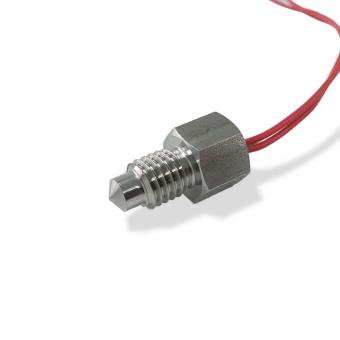
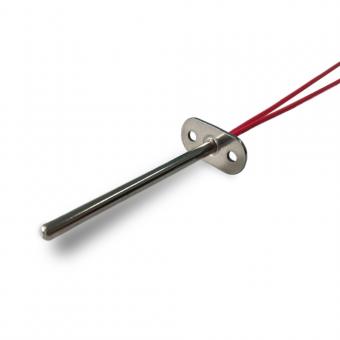
For engineers, the practical benefit is lower lead-wire error in simple 2-wire circuits. For OEM buyers, the benefit is a stable, standards-based sensor element that can be built into stainless probes, threaded housings, cable assemblies and custom temperature sensor designs. See the Focusens RTD temperature sensor range for probe options.
For temperatures at or above 0 C:
text
R(t) = R0 x [1 + A x t + B x t^2]
For temperatures below 0 C:
Where:
| Parameter | Value |
|---|---|
| R0 | 1000 ohms |
| A | 3.9083 x 10^-3 C^-1 |
| B | -5.775 x 10^-7 C^-2 |
| C | -4.183 x 10^-12 C^-4 |
| Alpha | 0.003851, also written as 3850 ppm/K |
These coefficients are for the common IEC 60751 / DIN EN 60751 industrial platinum RTD curve. If your system uses an older alpha 0.003920 curve, do not mix the tables; confirm the transmitter and sensor standard before calibration.
IEC 60751 tolerance classes define the allowed temperature error of the RTD element. PT1000 and PT100 use the same temperature tolerance classes; the ohm error is larger for PT1000 only because the nominal resistance is ten times higher.
| Item | Class A | Class B |
|---|---|---|
| Temperature tolerance formula | +/-(0.15 + 0.002 x abs(t)) C | +/-(0.30 + 0.005 x abs(t)) C |
| Error at 0 C | +/-0.15 C | +/-0.30 C |
| Error at 100 C | +/-0.35 C | +/-0.80 C |
| Common element range | -100 to +450 C | -196 to +600 C |
| Typical use | Precision HVAC, laboratory, medical, process control | General HVAC, industrial equipment, OEM probes |
Class A is not normally applied above +450 C. That is why the quick table leaves the Class A ohm tolerance blank at 500 C, 550 C and 600 C.
For quick checks, use the lookup table and interpolate between nearby points. For example, 1097.3 ohms is about 25 C, and 1483.3 ohms is about 126 C.
For production calibration, use the IEC 60751 equation in the sensor transmitter, PLC, firmware or data logger. When calculating temperature from resistance, solve the equation numerically or use a validated conversion library rather than assuming the curve is perfectly linear across the whole range. The included calculator module supports temperature-to-resistance and resistance-to-temperature lookup across -50 to +600 C.
In a 2-wire RTD circuit, the measured resistance includes sensor resistance plus both lead wires. A PT1000 reduces this error compared with a PT100, but it does not remove it.
Example:
For long cables or tight accuracy requirements, use 3-wire or 4-wire RTD wiring. For selection guidance, link this page to the RTD wiring guide and the PT100 vs PT1000 comparison.
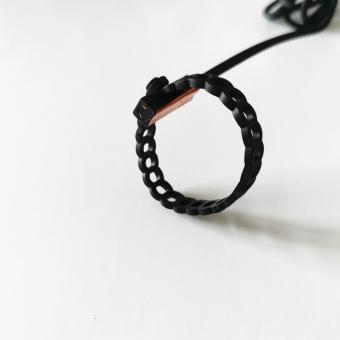
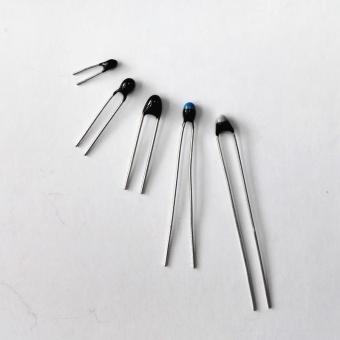
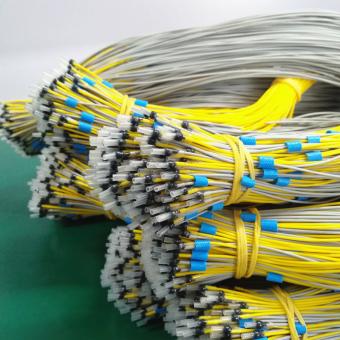
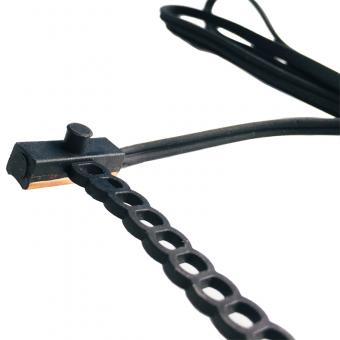
Focusens can build PT1000 RTD elements into custom probes for coffee machines, industrial temperature measurement, HVAC systems, energy equipment and appliance assemblies. For a product-style entry point, link to the Focusens high reliable PT100/PT1000 RTD temperature sensor. Typical customization points include:
| Custom point | Options to confirm |
|---|---|
| Sensing element | PT1000, PT100, Class A or Class B |
| Housing | Stainless probe, threaded probe, flange, ring terminal or custom metal shell |
| Cable | PVC, silicone, PTFE, fiberglass or high-temperature cable |
| Connector | Bare lead, JST, Molex, aviation connector or customer-specified connector |
| Calibration | IEC 60751 curve, customer test point, batch report if required |
CTA: Need a PT1000 probe, cable assembly or private-label temperature sensor? Send your drawing, target temperature range, cable length and connector requirement to Focusens for a custom RTD sensor quotation.
A PT1000 RTD is about 1385.1 ohms at 100 C on the IEC 60751 alpha 0.003851 curve.
A PT1000 RTD is about 1097.3 ohms at 25 C.
A PT1000 RTD is about 1483.3 ohms at 126 C. This is a useful example point because it often appears in lookup-table searches.
Not by tolerance class alone. PT1000 and PT100 can both be Class A or Class B. PT1000 often performs better in 2-wire circuits because the same lead resistance creates a smaller temperature error.
PT100 is 100 ohms at 0 C; PT1000 is 1000 ohms at 0 C. Their IEC 60751 curve shape and tolerance classes are the same, but PT1000 has ten times the resistance and about ten times the ohms-per-degree sensitivity.
The common industrial PT1000 table is defined by IEC 60751 / DIN EN 60751 for platinum resistance thermometers.
Use it for IEC 60751 alpha 0.003851 PT1000 sensors. Do not use it for non-standard platinum curves, damaged elements, transmitter-scaled outputs or sensors with significant lead-wire resistance that has not been compensated.
No.1 XiSan Road, Electromechanical Industry Park , High&New Tech.Zone. Hefei,Anhui,China
Tel : +86-551-69109668
Whatsapp : +86-13339100504
Email : info@focusens.com
Skype : melodyliu520






 +86-551-69109668